
Product info
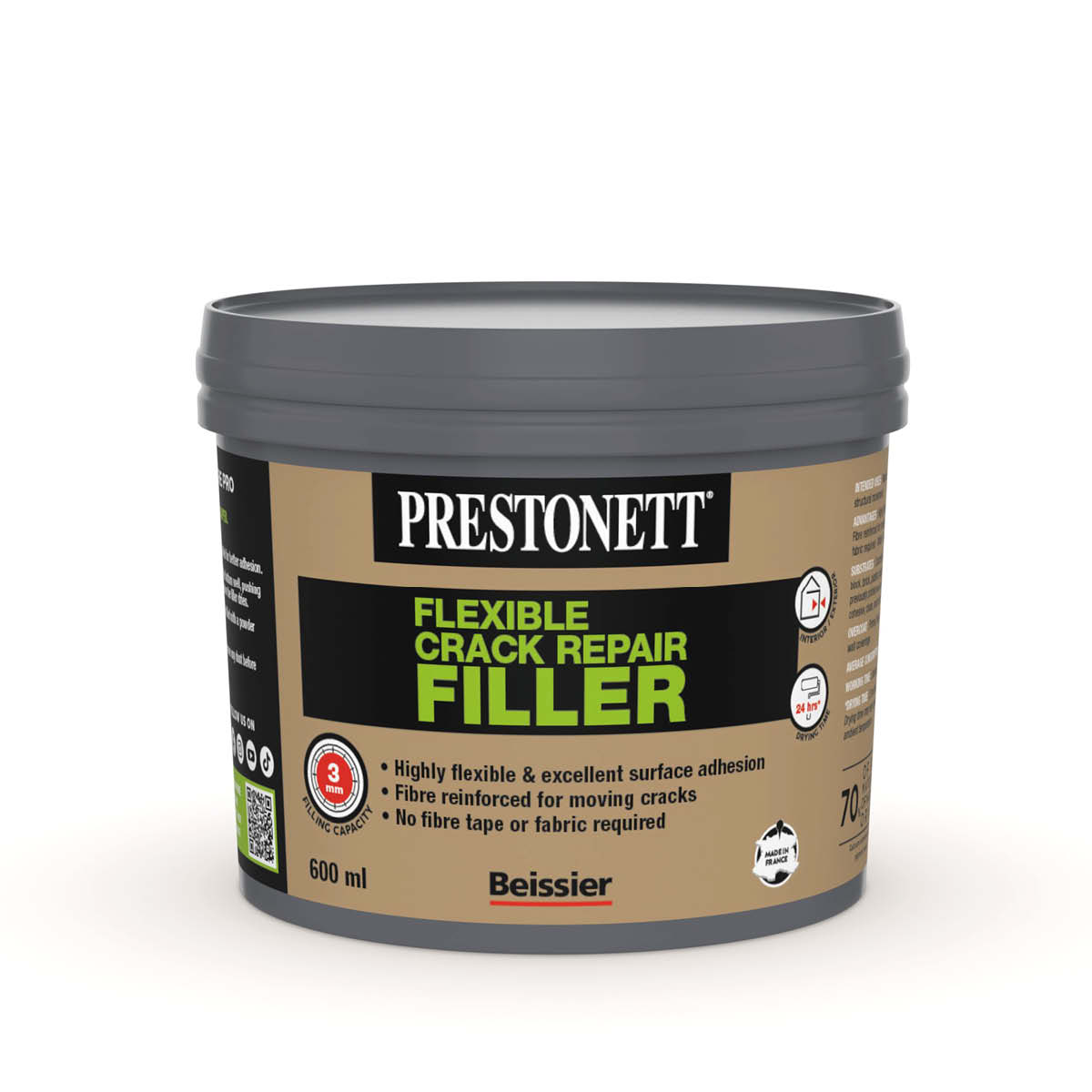
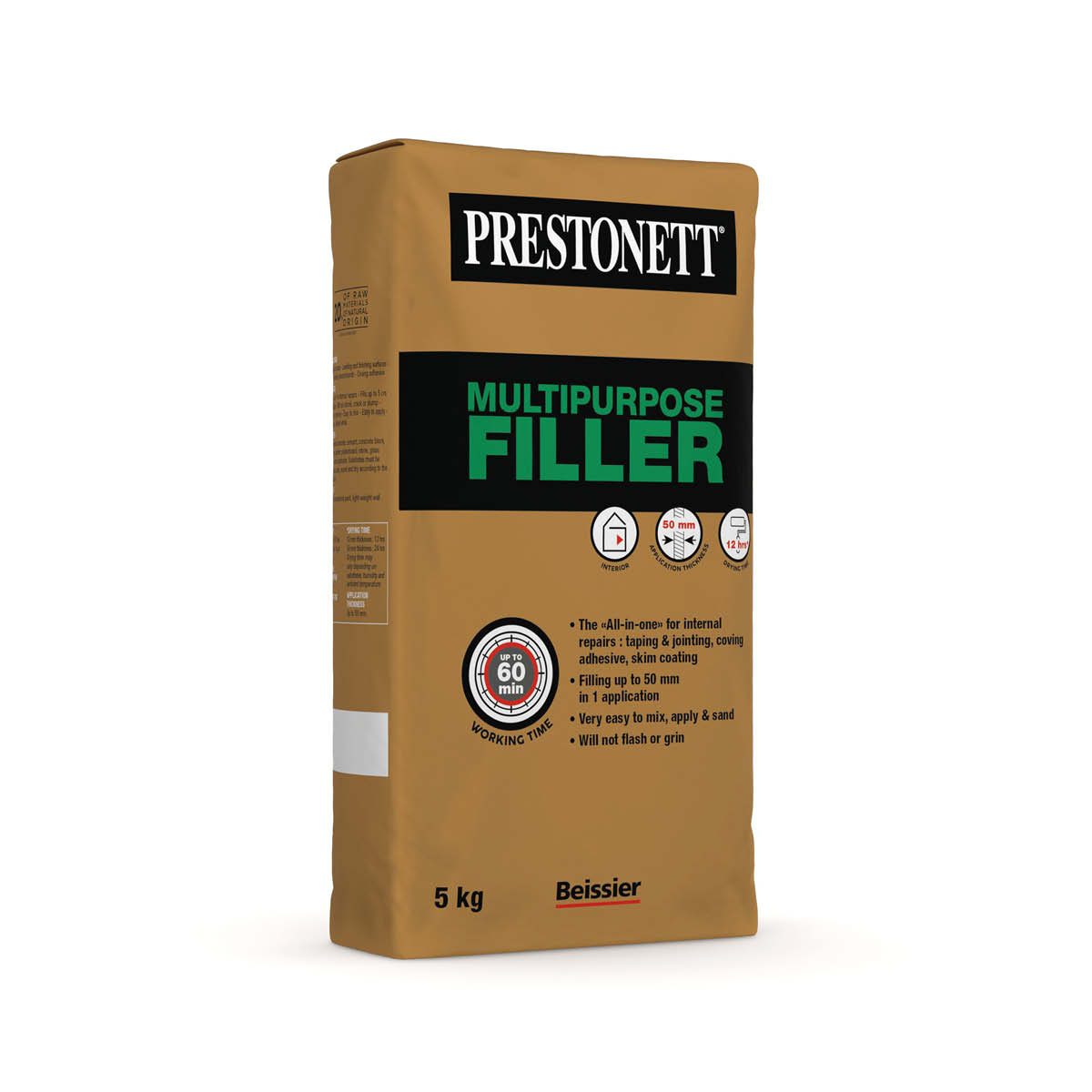
- Filler
- No thickness limitations
- Easy to sand
Our categories
By brands
By application
This article was useful to 0 person(s)
Does your wall have holes or cracks, and you’re unsure how to repair them? Follow our expert’s advice, and your wall will regain its smooth surface, ready for painting. This video explains how to properly apply filler to fix holes and cracks.
To ensure a successful project, start by protecting your floors and furniture with a protective tarp and preparing your wall. Sand any uneven areas to create a smooth surface, scrape out the holes, and widen the cracks. Dust the walls thoroughly and moisten the holes and cracks to enhance the filler’s adhesion. If your wall surface appears chalky, apply a primer hardener. This will strengthen and solidify weakened materials and stabilize powdery surfaces.
To fill holes and cracks, use a heavy-duty filler, such as PRESTONETT R. This product is suitable for all surfaces (brick, concrete blocks, plasterboard, cellular concrete, plaster tiles) and can be applied in any thickness. You will also need water and the following tools:
For your safety, wear gloves, a mask, and safety glasses.
Once your workspace is ready, prepare the filler. For a smooth, lump-free mixture, add water first, then the powder. Mix the filler with a blade until you achieve a homogeneous paste. Pro Tip: To check if your filler is ready, turn the blade upside down. If the filler stays in place, the consistency is perfect for application! You will have about 35 minutes to use the prepared filler.
To fill a hole, use two blades. Start at the center of the hole and work outward, pushing the air out. Once the hole is filled, use the wider blade to smooth the surface. For very large holes, our expert suggests stuffing them with newspaper before applying the filler as usual. Be sure to leave a slight overfill.
As the filler begins to set, scrape off any excess with the blade. If the filler shrinks slightly after drying, apply another layer to level it out.
Apply the filler from the inside to the outside of the crack. Press firmly on the blade to ensure the filler penetrates the edges. The same process applies to hairline cracks. For more details, watch the video with Raphaël Estrella, expert and technical advisor at Beissier.
Allow the filler to dry:
Sand the area with 80 to 120-grit sandpaper. After sanding, apply a finishing coat of filler and let it dry before painting.
Admire Your Work. Now step back and admire the result. You’re done!
Jérémy is the author of this page. By giving your opinion on this content, you will help improve its content